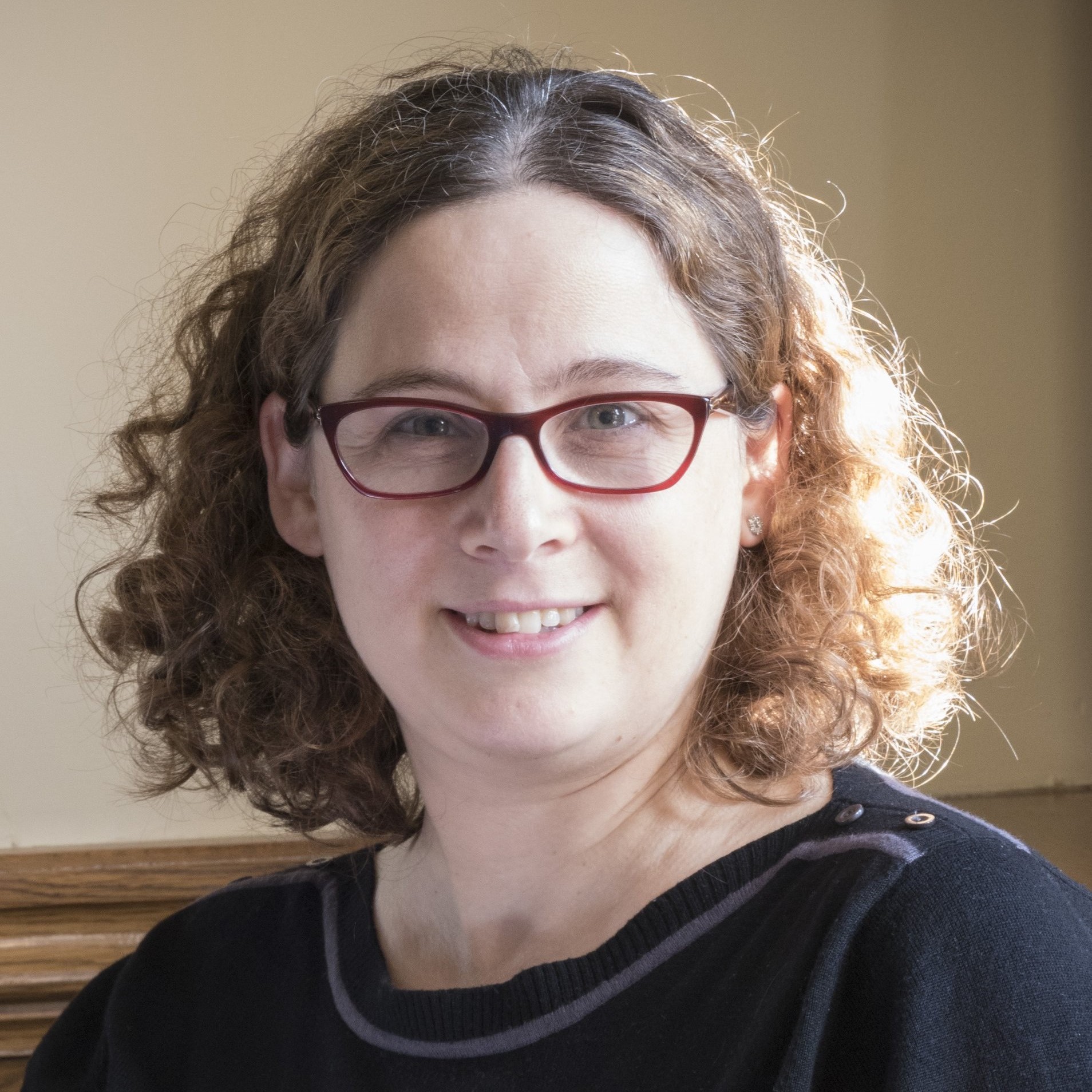
OASIS: Hi Dr. Aboh, we are looking forward to your invited talk at OASIS 6. Can you tell us, what is everyone wrong about?
I think linguistics and related fields (neuro, psycho), let’s say, the field of the study of language, including, how we behave when we ‘do language’, would have taken a different turn, if we had not embraced the misguided idea that what distinguishes humans from other species is the knowledge of language, with this knowledge equating to one language essentially. In this view, humans primarily evolve to become monolinguals. The mistake here is the focus on monolingualism which has been adopted in the field by almost everyone as the initial state. It's a fundamental mistake, because if anything makes us unique, it's not the one language we speak, it's our capacity as learners to learn more than one language simultaneously from birth. What is it about our system that is so flexible that a newborn can learn more than one language already at that very early age? By the way, there are more people in the world who are multilingual than monolingual, so we should assume that we evolved the language capacity to be multilingual.
This isn't just rhetorical—as we see in Africa and Southeast Asia for example, where people navigate 2, 3, 4 languages from birth. In such a learning ecology, the argument about the poverty of the stimulus suddenly becomes easy, you don't need to argue for years for the community to realise that what children learn in such an ecology cannot result solely from the input, which must be very heterogeneous and in a state of flux. Likewise, they cannot simply learn by instinct, since the form of the input is very important for what learners can learn and produce, so there must be a bit of each. Such a consensus would have saved us time, since the late fifties.
The distinction between what's internalized as a system and what can be learned makes more sense once we acknowledge that the input is by definition (and in reality) too heterogeneous to be formally characterized as “a language”. Multilingual speech in a multilingual ecology cannot be labeled as “language X, Y or Z” because it is always a combination of languages that people are exposed to. We can make much more progress by looking at multilingualism this way. The mistake about monolingualism feels like a kind of original sin—this is not just to make my voice heard, but by looking at the majority of humans living in multilingual ecologies, we can do much better than reducing the human knowledge of language to one language (and quite often one modality, i.e., spoken modality). Multilingualism is one of the most important questions we have to address.
Here, I'm alluding to linguistic behaviors that we can observe out there: people navigating smoothly between different languages. In such ecologies, it is hard to say “what this person just produced is Gungbe grammar, French grammar, or English grammar where we conceive of these grammars as collective and often uniform behavior of Gungbe-, French-, English-speakers: the standard language.
Taking our field to really be about the multilingual speaker will likely lead us to change the metrics we use, which are usually based on a standard, assumed to be mastered by the monolingual speaker. There is no community I know in the place I'm from where you can do this! People are different in how they do language. You can track aspects of this behaviour at the population level, but things look very different at the individual level, relating to different social networks involving different languages, different identity features.These ecologies are more complex than what we see in the West or the Global North in general, yet they form the majority of human communities on earth.
So working in the Global South we will be able to revise our theories, which are now too biased toward ecologies in the Global North..
OASIS: You believe in syntax/grammar/linguistic structure, right? Why?
I do believe in structure, but I don't think structure is everything. Language is more than structure. Structure gives us the patterns we see, and it's important for the learner, precisely because of what I was saying—if you have multilingual learners, you want a flexible cognitive system that can navigate these different languages. You need flexibility but also a certain degree of rigidity that constrains the learner to some extent. So structure is really important for learning.
Since the 80s, nobody stresses this enough—each time I talk about this aspect of the language capacity I try to emphasize this finding in linguistics. Lots of studies about linguistic universals exist. Many of the findings turn out to be controversial, except when it comes to the expression and alignment of tense, mood and aspect. One thing that is fascinating about human beings is that all the human languages we know of have the same ordering for tense, mood and aspect (and modality), something that can be schematized as Mood Tense Mood Aspect (MTMA). Variations in this ordering relate to either mirror images of this ordering, or partial mirror images thereof. But we’ve never found a language with completely scrambled or unpredictable order. The question is why? Why do human languages stick to arguably only one ordering MTMA or some of its variants? This is one of the most powerful structural constraints we know of today.
OASIS: And the constraint comes from outside the structure?
EA: Yes, and that's along with the idea that there is more to language than structure. So let’s say it's semantic hierarchy turned into structural constraints. An inbuilt structural constraint that we have to obey. I'm happy to agree that it's not coming out of nowhere, it's related to general semantic biases. So this is something we can investigate in an interdisciplinary way. We can engage in very different questions in this respect. But I find it fascinating that this issue is not discussed the way it should be in the field. Most people don’t even seem to know that we have this around since the 80s and have to deal with it. Here is the point: The human mind has evolved such that you expect far more variations.
So, anyway I do believe in structure, based on these findings.
There's another reason, which is more subtle, about some cross-linguistic regularities that relates to work by my supervisor Luigi Rizzi. Informally speaking, his observations suggest that when you have a relation between two syntactic elements - say an antecedent and a co-referring pronoun, this relation doesn't like to be broken up by some intruder. This makes sense if you have some structural constraints in place that prevent this kind of intervention effect. Thereforehaving structure makes it easier to account for these kinds of phenomena across languages
So I believe in structure, and I’m waiting for colleagues to tell me which other component of meaning making.
OASIS: Tell us how your career trajectory turned out in an unexpected way.
EA: When I finished my thesis, on the morphosyntax of Kwa languages spoken on the West Coast of Africa, a comparative syntax book comparing a set of Gbe languages in this Niger-Congo sub-family. I sent the thesis to a number of colleagues, and went to different conferences to present my work. In one of these conferences, I met NorvalSmith, a phonologist, who was working on the creoles of Suriname. His work focused on the structural and phonological contributions of West and Central African languages to Suriname creoles. The West African languages he focused on, included the Gbe languages I was working on too. During the conference I happened to give a talk on focus constructions. His talk was on focus constructions too, but in Saramaccan, one of the Suriname creoles he had shown was influenced by Gbe focus constructions We chatted a bit, and exchanged some papers. I also told him that I was on the job market. He didn't have a job for me at the time but wished me good luck. Two years later, though, he had submitted, together with the late Pieter Muysken, a project on the Suriname languages and their structural relations to the Gbe languages spoken in parts of Benin, Togo, and Nigeria. His letter basically said: “We have a postdoc for you, you have to come”!
This shows how you broaden your perspective just by talking to other colleagues. I knew nothing about creole languages or phonology, but it turned out we were working on the same stuff, and this changed my career.
So this is how I came to work on creoles. I soon realised there was a problem: This thing in the creole debates- you know a mistaken idea, that creoles came from pidgins. This view is based on the idea that the enslaved Africans could not communicate with each other in some African language and had to create a makeshift language. But we know this cannot be true, since these people were multilingual, and in many cases were coming from the same broad areas. We would therefore expect them to try to use any of their regional vernaculars to communicate rather than engaging in a makeshift language, worse one that is based on words taken from the colonial European language. This is a huge misconception. You go to any country in West Africa and you realise this hypothesis cannot hold because people there commonly speak 4, 5, 6, languages. In a recent survey in one of our projects, a consultant mentioned 8 languages! We have no reason to think that this is a modern or postcolonial development. If anything, the postcolonial trend one observes in these countries is a shift toward the official languages (e.g., French, English, Spanish, Portuguese). We must therefore conclude that colonialism precludes multilingualism rather than favoring it..
So clearly, right from the start, I was thinking there is something fishy there. Intuitively, it seemed to me that what learners do in such multilingual contexts is to put together different pieces of grammar that allow them to produce patterns that the people they are interacting with can recognise and understand. Under such a view, the grammatical machinery that speaker-learners rely on neednot be labeled for a particular language.
To give an example, English is SVO, and so are Gungbe, Gengbe, Fongbe, and French. I speak all these languages with different levels of fluency. When I produce a string that is SVO in any of these languages, how do we know if the underlying engine producing this string belongs to a particular language? I don't think there's any way to know this, experimentally, in particular if we assume that syntax operates on features rather than lexical items or a vocabulary list. It seems more likely that what I'm using is a fused system, or a more integrated system that can produce these strings with morphology from any of these languages.
All these questions are out there - what hurts me is that we're not spending time answering these fundamental questions, we're spending time trying to see who has the most brilliant idea, but these are the facts - we can't hide away from these facts.
So in a meeting like OASIS, these are the kinds of broad questions we can ask ourselves- we can talk about specific questions relevant to our subfields independently, but we shouldn't do that at the expense of these broad questions. To answer these broad questions, we must collaborate.
For such a collaboration to be fruitful, we have to invent a common discourse - how do we want to describe the phenomena in general terms? Only after that can we get to more specific issues. At the moment we still don’t have a common discourse about multilingualism, what it is, how it varies across communities and ecologies, and how these might impact the cognitive processes we engage in. We still consider multilingualism an exceptional behaviour. We must change this: monolingualism is the exception.
OASIS: Thanks for sitting down with us—we're looking forward to seeing you in October.
EA: Thanks.