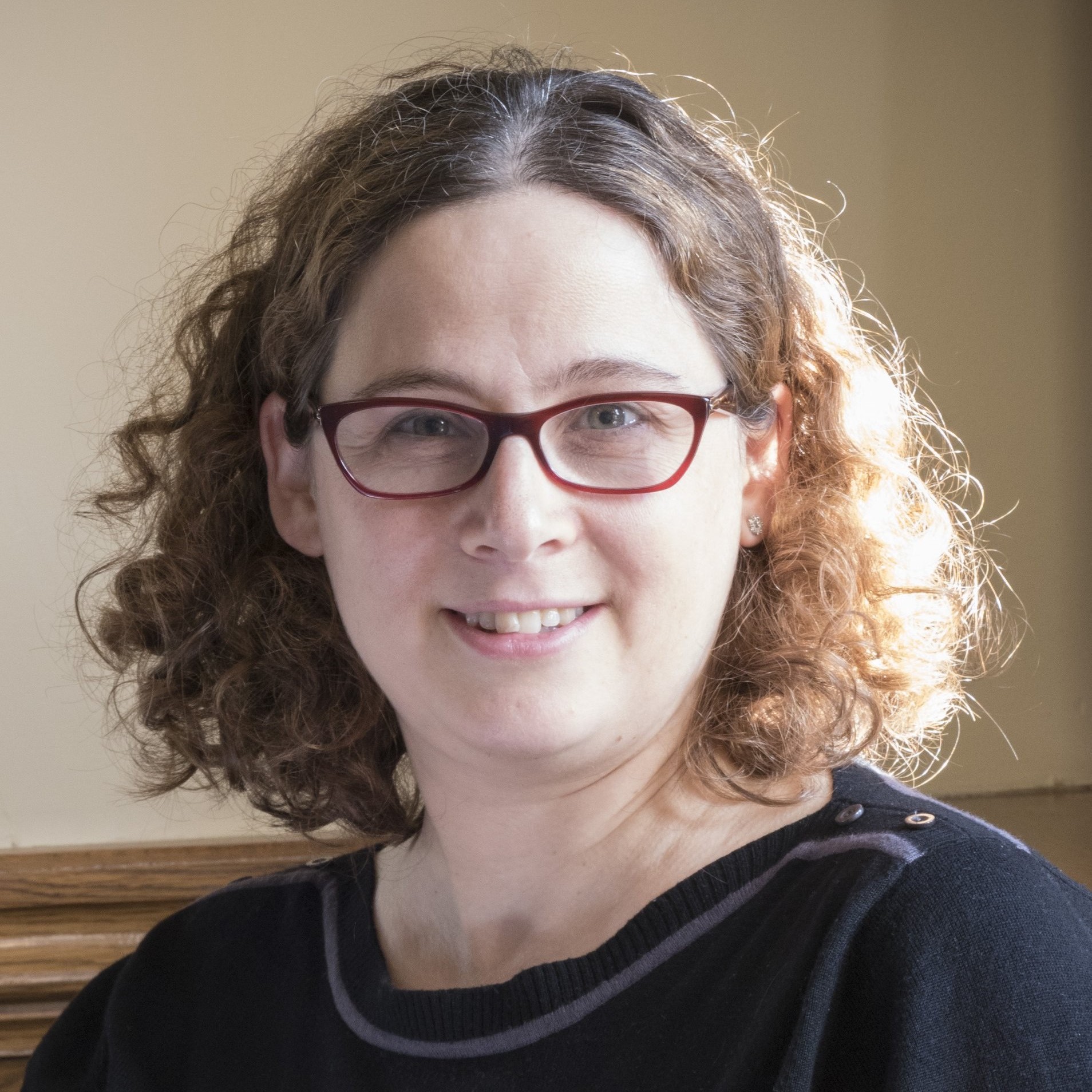
Ofra Magidor is the Waynflete Professor of Metaphysical Philosophy at the University of Oxford and Magdalen College. She holds a B.Sc in philosophy, mathematics, and computer science from the Hebrew University of Jerusalem and a BPhil and DPhil in philosophy from the University of Oxford. Her work covers a wide range of issues in metaphysics, philosophy of language, philosophical logic, and epistemology. She is the author of two books: Category Mistakes (OUP2013) and Property Versatility and Copredication (OUP 2025, co-authored with David Liebesman).
OASIS: Hello Dr. Magidor, thanks for sitting down with us for an interview. What's your favourite ontological entity and why?
OM: I recently published a book on copredication (co-authored with David Liebesman), and actually one conclusion we came to in our work is that ontological categories – at least broad or high-level categories – are not that important.
Think of the distinction between abstract objects and concrete objects. When people make these distinctions, they often have in mind some paradigmatic examples: such as numbers on the abstract side, and tables on the concrete side. But so many other entities don’t fall neatly into either of these paradigms.
Take for example a symphony. It shares some features with paradigmatic abstract objects – it doesn’t have a shape or colour (except in metaphorical terms), it can have multiple physical manifestations (performances) or even none at all. On the other hand, it shares some features with paradigmatic concrete objects: it comes into existence at a certain time (when a composer creates it), it can have a temporal duration (e.g. be roughly 30 minutes long), can be quiet or loud, and it can even be heard by an audience!
Should symphonies, then, count as abstract or as concrete? I think the lesson is that these broad ontological categories are actually just not a very useful way to taxonomize things. The problem isn’t just that it’s not clear on which side of the divide things like symphonies should fall. Rather the problem is that however you end up classifying them – telling you that an entity is abstract or concrete doesn’t give you a lot of information about what properties it might have. It doesn’t settle whether it exists in time or space, whether it can be heard, and so on.
OASIS: What's the story of how you came to be interested in the topic you'll be talking about at OASIS?
OM: When Dave Liebesman and I were working on our book on copredication, we looked closely at theories on which copredication sentences (sentences such as ‘Lunch was delicious but took hours’) are closely connected to polysemy (i.e. the fact that ‘lunch’ is polysemous between a food and an event sense). We ourselves reject these theories (we think ‘lunch’ is polysemous, but that plays no role in account for the copredication sentence – on our view, only one of the two senses is at play in each felicitous copredication sentence.
Anyhow, as part of our delve into the literature about polysemy, we encountered a lot of empirical work in psycholinguistics on how polysemy is processed – literature that the philosophers and linguists theorizing about the phenomenon often rely on in their arguments.
Initially we didn’t think this empirical work was directly relevant to what we were doing – it seemed like our theoretical claims on the semantics of copredication were completely orthogonal to questions of psychological processing. But eventually, we realised that while the conclusions of these empirical studies were in principle orthogonal to our views, it turns out that our view on how to account for copredication (the Property Versatility view) causes some serious problems for the experimental design of many of these studies. This is what my talk in OASIS will be about.
Stepping back, this seems to me a really interesting situation: usually we think of the interaction between empirical and theoretical work, as only working in one direction: the empirical results inform the more abstract theorizing. But here we have an interaction in the opposite direction, where our theoretical claims make a difference to how certain kinds of experiments should be designed.
OASIS: Your PhD thesis in six words.
OM: I can’t quite do it in six, but I think I can just about manage it in seven:
‘Category mistakes are meaningful but pragmatically inappropriate’.
In a few more words: in my thesis (which then evolved into my first book), I discussed category mistakes – sentences such as ‘Green ideas sleep furiously’ or ‘The number two is blue’. One of my aims was just to bring together and taxonomize earlier accounts of the phenomenon in the 20th century. But I also systematically defended a particular view: that category mistakes are syntactically well-formed, meaningful, and truth-valued but they suffer from pragmatic presupposition failures. The idea is that a predicate such as ‘blue’ generates the presupposition that their argument is coloured, and this is a presupposition that in most contexts, speakers take to be false of, e.g., the number two.
Zooming out, the view I defended offers a middle ground between people like Chomsky who thought that category mistakes completely crash – they are meaningless and possibly even syntactically ill-formed, and people like Quine who suggested they were perfectly ordinary, albeit somewhat “silly” sentences.
OASIS: What's your favourite fact about a language other than English?
OM: In my native language Hebrew, there are designated verbs for harvesting different kinds of fruit. So you have a different verb for ‘I harvested the grapes’, for ‘I harvested the dates’, and for ‘I harvested the figs’. Similarly, there are also designated verbs for putting on different types of clothes: you use a different verb for ‘I put on my socks’, ‘I put on my shoes’, and ‘I put on my hat’.
This fact turns out to have some implications to our theory of category mistakes. For example, in the Aspects, Chomsky argued that we can account for category mistakes such as ‘The boy frightened sincerity’ using selectional features: ‘sincerity’ is marked with ‘-animate’, but ‘frightened’ requires a ‘+animate’ in its direct object position. He also thought that these features were independently motivated parts of syntax –for example, we need the animate/inanimate markings in order to account for the ‘who’/’which’ distinction. But this claim looks much less plausible for these specialized Hebrew verbs: for example, in order to account for why the translations of ‘I grape-harvested the dates’ or ‘I sock-put-on my shoe’ are category mistakes in Hebrew, we would need selectional features such as ‘+grape’ or ‘+sock’ – and it certainly doesn’t seem that these are independently motivated parts of syntax!
OASIS: Do you work step by step or follow hunches (or neither, or both)? Explain?
OM: I have a very different process for different projects. Sometimes I start out with a fairly clear idea of what I want to argue for. But other times, I’m genuinely puzzled by a phenomenon and just want to work through some options to figure out how to address it.
One interesting case is my paper ‘The myth of the de se’ (Nous 2015): it always seemed to me like the examples that were supposed to motivate why the de se was a distinctive phenomenon were just instances of the very general Frege’s Puzzle. But people kept telling me that wasn’t true: there was something special about the de se puzzles that set it aside from other cases of the puzzle. So I started out this project assuming what I was told was correct, and really just trying to get clearer about what exactly it was that made the de se special. In the end, though, I came to the conclusion that my initial reaction was right all along.
Even when I start out with what feels like a pretty specific idea, things often take all sorts of turns once I try to work out the details. This is to me one of the most exciting things about my job: that I get to try to better understand and figure out things that I’m puzzled about.
OASIS: Thank you for your answers. We're looking forward to seeing you and hearing more about your work in Lisbon!
OM: Thanks, see you then.